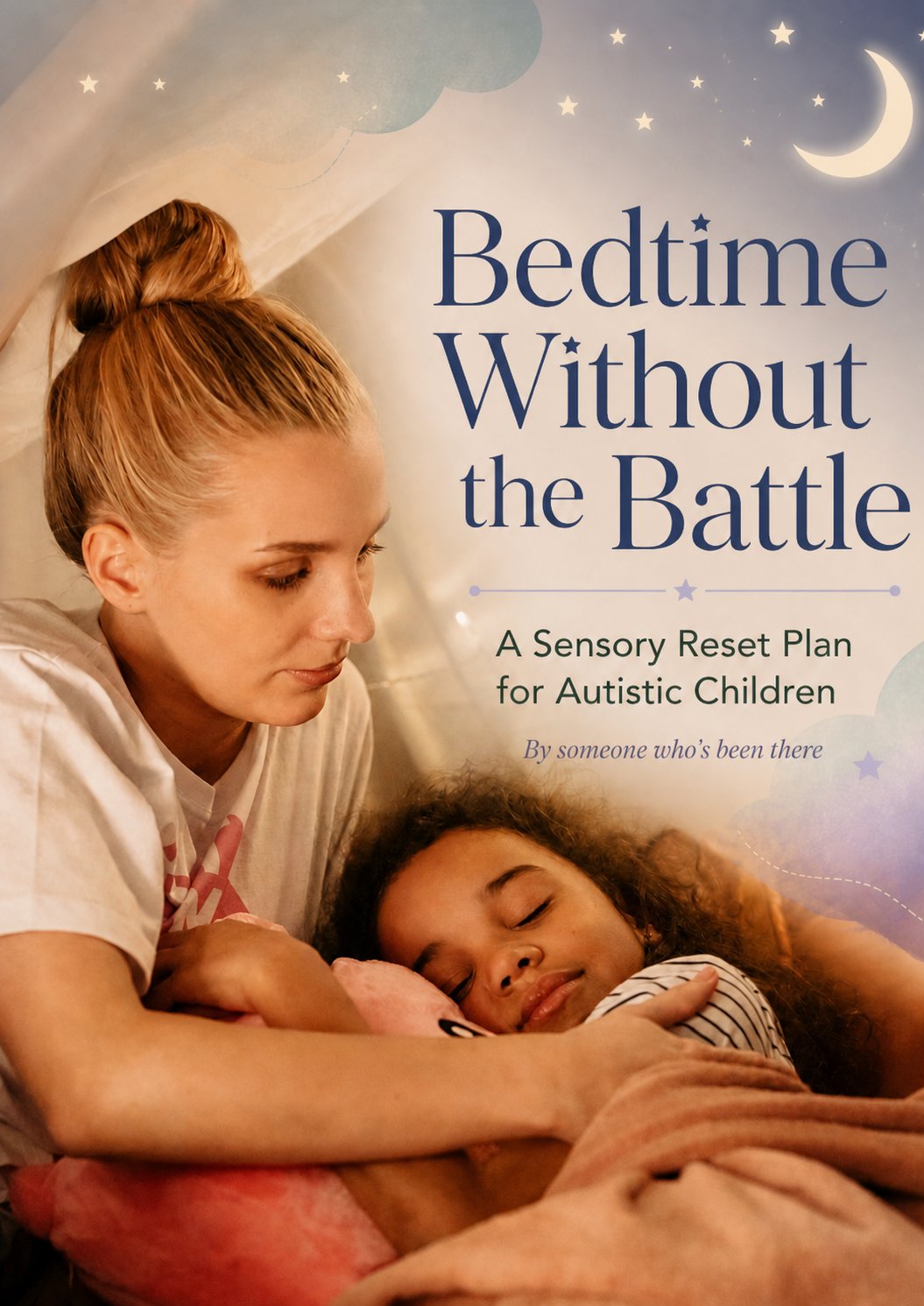
A gentle home for autism families

Calmer evenings start with a softer routine.

Warm, neurodiversity-affirming tools for parents and caregivers of autistic children. Practical worksheets. Sensory-aware guidance. No pressure to fix anything.

Neurodiversity-affirming

No fixing, no shaming. Tools built around how autistic kids actually experience the world.

Sensory-aware

Every resource starts with the nervous system, not the behavior. Bodies first, then routines.

Parent-supported

Written by someone who's been there. You're not failing, and you're not alone in this.

From the families using it

What parents are saying.

We tried so many bedtime routines that didn't account for my son's sensory needs. The Sensory Bedtime Menu was the first time I saw the actual categories of input his nervous system was looking for. Wall pushes before pajamas changed our whole evening.

Renee M.Parent of a sensory-seeking 6-year-old

I'm a pediatric OT and I bought this to share with families. Honestly, it's clearer and warmer than most resources I see in clinical settings. The Quick-Calm Cards are now sitting on three of my clients' fridges.

Marcus D.Pediatric Occupational Therapist

We didn't 'fix' bedtime. But it's softer. Some nights are still hard. The biggest shift was the language. My husband and I stopped saying she's 'being difficult' and started saying she 'needs more pressure tonight.' That alone changed the whole mood.

AnonymousMom of an autistic 7-year-old

Spent $20 on this and skipped about $200 of trial-and-error. The sample routine for the 'transition-meltdown' kid was basically a portrait of mine. Started using the wind-down hour structure and we're seeing real change in week two.

Jamal T.Dad of an autistic 5-year-old

The note about how a regulated parent helps a child regulate hit me harder than I expected. I've started taking five quiet minutes for myself before going into my son's room at bedtime. It's such a small thing. It's helped both of us.

Liv P.Mom of two, one autistic
How we approach this

Small things, done gently, repeated kindly.

Every resource here is built on three quiet principles. They sound simple. They are not always easy.

i.

Behavior is communication

A child melting down at bedtime isn't being difficult on purpose. Their nervous system is asking for something the room can't provide yet. We start there.

ii.

Predictable beats perfect

An imperfect routine done the same way every night usually helps more than a perfect one done inconsistently. Repetition is regulation.

iii.

Parents matter too

A regulated parent helps a child regulate. Every guide here includes space for the adult, because you can't pour from an empty cup at 9 p.m.

Your child is not being difficult on purpose. Their nervous system is doing its best with the information it has. Behavior is communication, especially at bedtime. from the guide